
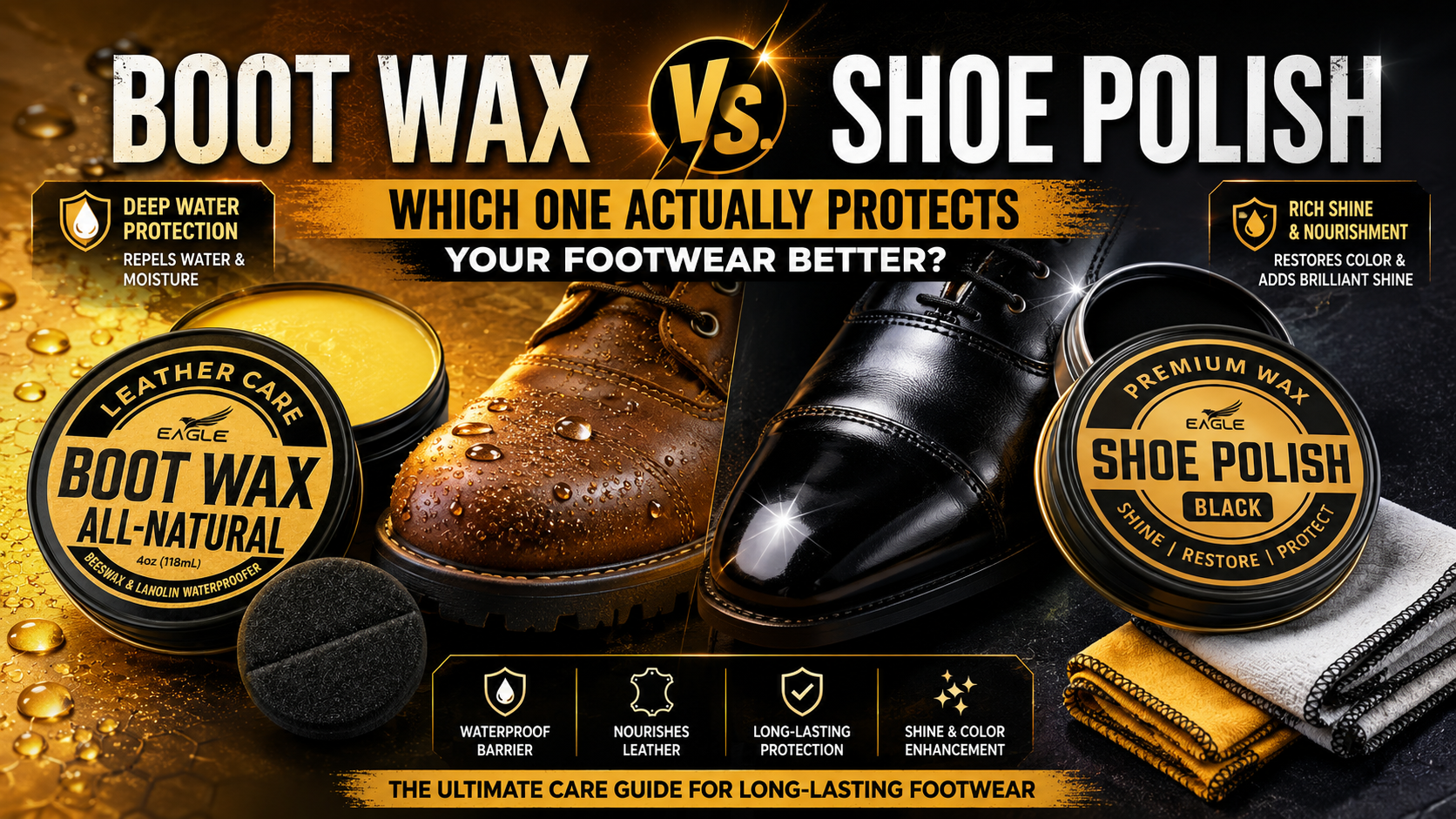
Boot Wax vs. Shoe Polish: Which One Actually Protects Your Footwear Better?
Boot wax and shoe polish both protect leather, but they do not protect it in the same way. Boot wax is usually the stronger choice for water resistance, outdoor wear, work boots, hiking boots, and rough weather. Shoe polish is usually better for shine, color restoration, scuff coverage, and a refined finish on dress shoes, office shoes, and smooth leather boots.
The best choice depends on the footwear, the leather type, and the conditions you wear it in. A pair of black dress shoes needs a different routine than a pair of work boots exposed to mud, rain, salt, and jobsite dust. This guide compares boot wax vs. shoe polish in practical terms so you can choose the product that actually protects your footwear better.
Affiliate disclosure: This article includes affiliate links. If you purchase through these links, Designer Trends INC may earn a commission at no extra cost to you.
Animated protection comparison
Quick verdict
What Is Boot Wax?
Boot wax is a heavier protective treatment designed to create a moisture-resistant barrier on leather. Many boot waxes use beeswax or similar waxes to help seal the surface, reduce water absorption, and protect against rougher outdoor conditions. It is especially useful for work boots, hiking boots, motorcycle boots, ranch boots, and casual leather boots that see rain, mud, snow, or dust.
Boot wax usually leaves a more rugged, matte, or satin finish than shoe polish. It can darken some leathers, especially lighter brown, tan, natural, or pull-up leather. That darkening is not always bad; many boot owners like the richer, conditioned look. But if you want a crisp mirror shine, boot wax is not the right tool.
What Is Shoe Polish?
Shoe polish is made to improve the appearance of smooth leather. It can restore color, cover light scuffs, create shine, and add a thin protective surface layer. Cream polish is better for color nourishment and scuff blending. Wax polish is better for shine and surface protection. On dress shoes, a good polish routine can make leather look sharper and more formal while helping it resist small marks.
The Eagle Shoe Polish Wax 3-Piece Kit on Amazon is listed as a high-gloss shoe polish product for restoring color, covering scuffs, nourishing, and protecting leather. The listing notes that it includes polish plus application and shine cloths. That makes it a better fit for smooth leather shoes, black leather footwear, dress shoes, and polished boots than for rugged waterproofing jobs.
Boot Wax vs. Shoe Polish: Protection Comparison
| Category | Boot wax | Shoe polish |
|---|---|---|
| Water resistance | Stronger choice for rain, mud, snow, and outdoor boots. | Light protection only, especially with wax polish layers. |
| Shine | Usually matte to satin, not mirror-like. | Best for gloss, mirror shine, and formal appearance. |
| Color restoration | May enrich or darken leather but usually does not restore precise color. | Better for covering scuffs and refreshing black or brown leather. |
| Best footwear | Work boots, outdoor boots, hiking boots, rugged leather. | Dress shoes, office shoes, uniform shoes, smooth leather boots. |
Which One Protects Better?
If protection means water resistance and durability in rough weather, boot wax protects better. It creates a heavier barrier and is built for footwear that faces moisture, mud, and abrasion. If protection means preserving a formal finish, hiding scuffs, refreshing color, and keeping dress leather looking sharp, shoe polish protects better.
In other words, boot wax is better armor; shoe polish is better grooming. A work boot needs armor. A dress shoe needs grooming. Some smooth leather boots can use both at different times, but layering should be done carefully so the leather does not become sticky, overly dark, or clogged with product.
Recommended Boot Wax
For rugged weather protection, the Eagle Boot Wax Waterproofer & Conditioner on Amazon is listed as a 4oz beeswax leather waterproofing wax for boots, shoes, gloves, and jackets. The page describes it as a leather sealant and protector, and it includes an applicator sponge according to the product details.
This type of product is the stronger choice when your priority is reducing water absorption and protecting leather boots from outdoor wear. Use it on compatible smooth leather only, and test first because wax treatments can darken leather. Avoid using boot wax on suede, nubuck, patent leather, fabric, mesh, or delicate fashion finishes unless the product label specifically allows it.
Recommended Shoe Polish
For shine and scuff coverage, the Eagle Shoe Polish Wax 3-Piece Kit is the better match. It is positioned for high-gloss shine, color restoration, scuff coverage, nourishment, and protection on leather shoes and accessories. The listing shows color options such as black, brown, clear, dark brown, and navy blue, though availability may vary.
Shoe polish is the right choice for dress shoes, office footwear, military-style shine routines, leather belts, and smooth leather boots that need a cleaner, more polished appearance. Use thin layers and buff well. Too much polish creates buildup around stitching, creases, and brogue holes.
Can You Use Boot Wax and Shoe Polish Together?
Sometimes, but not always. On rugged smooth leather boots, you can clean and condition first, use cream polish if you need color restoration, then apply a light wax treatment for weather resistance. On dress shoes, heavy boot wax can dull the shine and darken the finish, so it is usually better to use shoe polish and a dress-shoe-safe protector instead.
Do not stack products without a reason. More layers do not always mean more protection. Product buildup can attract dust, make leather sticky, reduce breathability, and create uneven color. If you switch from polish to boot wax or from wax to polish, clean the leather first and apply the new product lightly.
How to Apply Boot Wax Correctly
- Brush off dry dirt and wipe the boot clean.
- Make sure the leather is dry before applying wax.
- Test the wax on a hidden area to check darkening.
- Apply a thin layer with a cloth, sponge, or applicator.
- Work wax into seams, welt areas, and high-exposure zones.
- Let it absorb, then buff away excess product.
- Allow the boots to rest before wearing them outdoors.
The key is restraint. A thin, even layer usually performs better than a thick, greasy coat. If the leather still looks dry or water resistance is weak after the first application, apply another light layer later.
How to Apply Shoe Polish Correctly
- Remove dust with a horsehair brush.
- Wipe the leather with a slightly damp cloth if needed.
- Use cream polish for color restoration or wax polish for shine.
- Apply a small amount in circular motions.
- Let the polish haze or dry according to the product directions.
- Buff with a brush or shine cloth.
- Repeat thin layers only where more shine or color is needed.
For mirror shine, focus wax polish on toe caps and heel counters, not flex points. Heavy wax on creases can crack and look cloudy after walking.
Protection scorecard
When to Choose Boot Wax
- Your boots are exposed to rain, mud, snow, salt, or wet grass.
- You care more about weather protection than a mirror shine.
- The leather is rugged smooth leather, work boot leather, or outdoor boot leather.
- You want to protect seams, welt areas, and high-wear zones.
- You are comfortable with possible darkening or a more matte finish.
When to Choose Shoe Polish
- Your shoes need shine, color depth, and scuff coverage.
- You wear dress shoes, formal boots, office shoes, or uniform shoes.
- You want black or brown leather to look sharper and more even.
- You need a refined finish rather than heavy water resistance.
- You want to maintain leather accessories like belts or bags with a polished look.
What Not to Use Either Product On
Do not use boot wax or standard shoe polish on suede, nubuck, mesh, canvas, knit sneakers, or delicate fabric panels. Suede and nubuck need a brush, eraser, cleaner, and protector made for raised-nap leather. Patent leather needs coated-leather care. White sneakers need sneaker-safe cleaning methods rather than heavy wax or dark polish.
For related guidance, read our suede protector spray guide, shoe polish vs. leather conditioner guide, and complete leather shoe care guide.
Frequently Asked Questions
Is boot wax better than shoe polish?
Boot wax is better for water resistance and rugged outdoor protection. Shoe polish is better for shine, scuff coverage, and color restoration on smooth dress leather.
Does boot wax make leather waterproof?
Boot wax can improve water resistance, but it does not make leather completely waterproof forever. Reapply as needed and avoid soaking leather when possible.
Can shoe polish protect boots?
Yes, shoe polish can protect smooth leather boots from minor scuffs and add shine. For wet or rough outdoor conditions, boot wax is usually the stronger protective option.
Will boot wax darken leather?
It can. Wax treatments often darken tan, brown, natural, or pull-up leather. Always test on a hidden area before treating the whole boot.
Can I use shoe polish after boot wax?
Sometimes, but polish may not apply evenly over wax buildup. Clean the leather first, use thin layers, and test before treating visible areas.
Which product should I buy first?
Buy boot wax first if your footwear faces rain, mud, snow, or jobsite wear. Buy shoe polish first if your footwear needs shine, color restoration, and a sharper dress finish.
Conclusion
Boot wax and shoe polish both protect leather, but they solve different problems. Boot wax is the better protector for wet weather, rugged boots, and outdoor use. Shoe polish is the better protector for appearance, color, scuff coverage, and shine on smooth dress leather.
If your priority is keeping work boots alive through tough conditions, choose the boot wax waterproofer. If your priority is making black leather shoes or polished boots look sharp, choose the shoe polish wax kit. For the best long-term results, clean first, apply the right product for the job, and keep the routine consistent.
Join the Discussion
Comments (0)
No comments yet. Be the first to share your thoughts!