
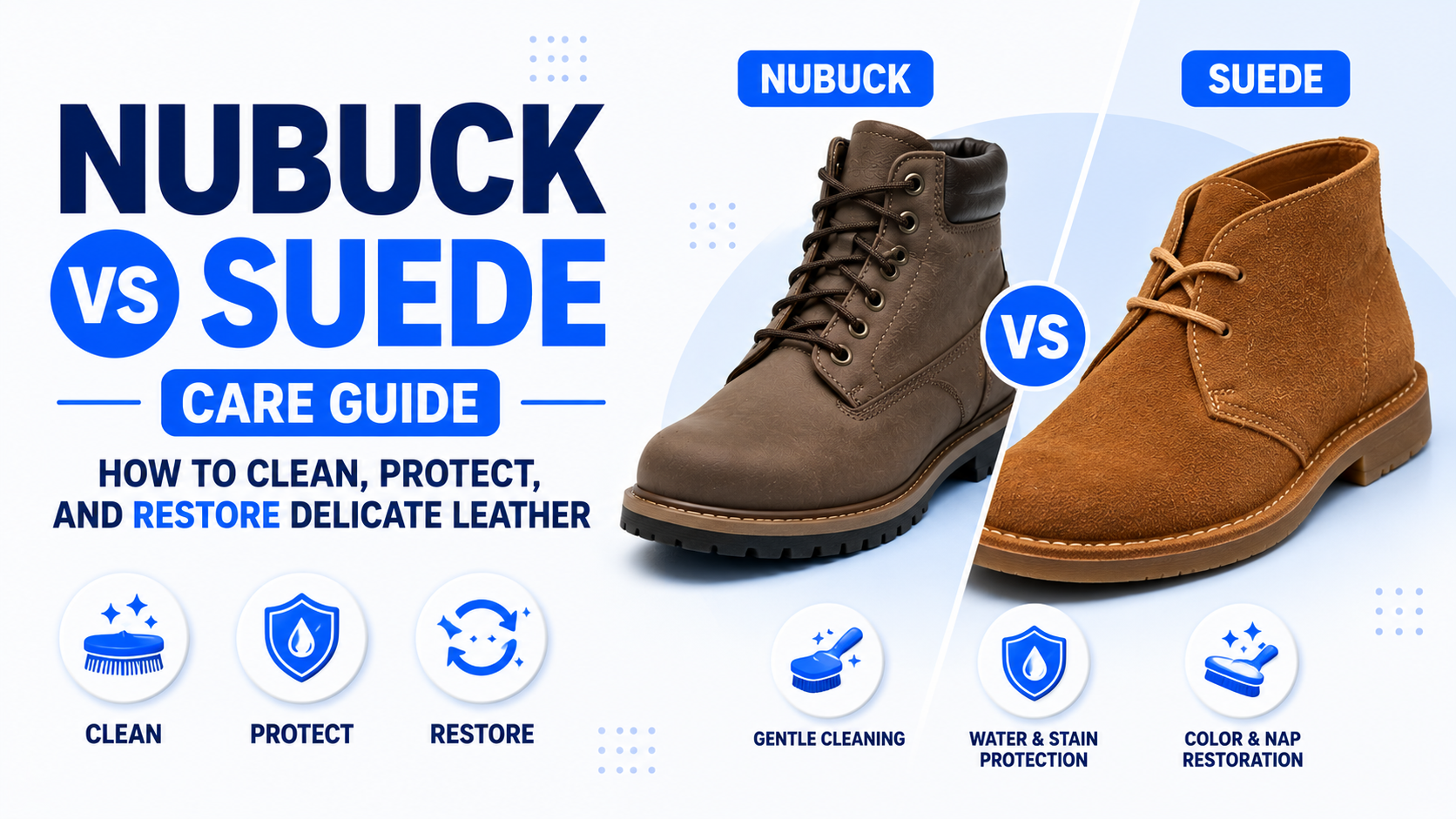
Nubuck vs Suede Care: How to Clean, Protect, and Restore Delicate Leather
Nubuck and suede are often confused because both have a soft, matte surface. They also share the same biggest weakness: water, oil, dye transfer, and harsh cleaners can change the texture quickly. The difference matters because nubuck and suede respond differently to brushing, erasers, protector sprays, and stain treatment. A routine that works on rugged smooth leather can ruin both of them.
This guide compares nubuck vs suede care in practical terms. It explains how to identify each material, what tools to use, how to clean dry dirt, how to handle water marks and oil stains, how to apply protector spray, and how to store delicate leather shoes, boots, bags, and jackets.
Affiliate disclosure: This article includes affiliate links. If you buy through these links, Designer Trends INC may earn a commission at no extra cost to you.
What Is Suede?
Suede is leather with a soft raised nap. It is often made from the underside of the hide, which gives it a plush texture and a more open fiber structure. That texture is why suede looks rich and tactile, but it also means suede absorbs water and oil more easily than smooth leather. Dirt can sit inside the nap instead of only on the surface.
Suede is common on loafers, boots, sneakers, handbags, jackets, and accessories. It can look casual or luxurious depending on color and construction. Because the nap is visible, brushing direction matters. Heavy pressure can flatten it, while gentle brushing can revive it.
What Is Nubuck?
Nubuck is also a nap leather, but it usually has a finer, velvety surface. It is often made by sanding or buffing the outer side of the hide. This can make nubuck feel smoother and slightly more structured than suede. Nubuck is common on premium boots, casual shoes, outdoor footwear, and bags.
Nubuck can be more durable than delicate suede in some uses, but it is not low-maintenance. It still dislikes soaking, oils, dark dye transfer, and harsh cleaners. Because the nap is finer, marks can look like shiny patches or flattened areas if the wrong tool is used.
How to Tell Nubuck and Suede Apart
Run a clean fingertip lightly over a hidden area. Suede usually has a deeper, fuzzier nap and may change color more visibly as the fibers move. Nubuck usually feels finer and more velvety, with a shorter nap. Look at product labels when available. If a care label says suede, nubuck, roughout, or oiled nubuck, follow that label over general advice.
When in doubt, treat the item as delicate. Start with dry brushing, avoid smooth leather conditioner, and test any protector or cleaner in a hidden area. The first goal is to preserve texture. Color correction and deep stain removal come later, if they are possible at all.
Essential Tools for Nubuck and Suede
A basic kit should include a suede brush, nubuck brush or crepe brush, suede eraser, microfiber cloth, and a protector spray designed for suede and nubuck. A soft toothbrush can help around seams, but avoid stiff wire brushing unless the tool is specifically made for the material and you know how much pressure to use.
Do not use standard shoe polish, boot wax, mink oil, smooth leather conditioner, dish soap, bleach, or alcohol wipes on nubuck or suede. These can flatten the nap, create dark stains, or leave shiny residue. If the item is expensive or deeply stained, professional cleaning is usually better than experimenting.
How to Clean Dry Dirt
Dry dirt is the easiest problem to handle. Let mud dry completely, then brush gently in one direction. For suede, use a suede brush to lift the nap and remove particles. For nubuck, use a nubuck-safe brush with lighter pressure. If a mark remains, use a suede or nubuck eraser with small controlled strokes. Brush again afterward to blend the texture.
Do not add water to dry dirt immediately. Water can turn dust into a stain and drive particles deeper into the fibers. Patience is part of delicate leather care. Dry first, brush second, erase third, and only then decide if a specialty cleaner is needed.
How to Handle Water Marks
If suede or nubuck gets wet, blot with a clean absorbent cloth. Do not rub. Let the item dry naturally at room temperature. Use shoe trees for footwear or clean tissue for bags so the shape stays steady. After drying, brush the nap gently. Many light water marks improve after the fibers are lifted and evened out.
For larger water rings, use a cleaner made for suede or nubuck and follow the label carefully. The challenge is evenness. Spot cleaning only the ring can leave a new border, so some products require treating a broader panel. Always test first.
How to Handle Oil, Grease, and Dye Transfer
Oil and grease are harder than water because they move into the fibers. Blot fresh oil immediately without pressing it deeper. Some people use absorbent powders, but powders can leave residue and may not be safe for every color. A suede cleaner or professional care is safer for valuable items.
Dye transfer from denim, dark clothing, or packaging can be stubborn, especially on pale suede or nubuck. Avoid aggressive rubbing. It can spread the dye and flatten the nap. For light marks, an eraser may help. For deep transfer, professional cleaning may be needed.
How to Apply Protector Spray
Protector spray is one of the best preventive steps for both materials. Clean and dry the item first. Brush the nap, test the spray on a hidden area, then apply a light, even mist from the recommended distance. Let it dry fully, then brush again. A second light coat may be useful if the product label recommends it.
Protector spray does not make suede or nubuck waterproof. It gives you more time to blot spills and makes some dirt easier to brush away. For a deeper application walkthrough, read the suede protector spray guide.
Care Routines by Item Type
Suede shoes and nubuck boots should be brushed after wear when they look dusty or flattened. Use shoe trees so creases do not collapse the nap. Bags should be stored in breathable dust bags and kept away from dark denim and makeup. Jackets should be hung on shaped hangers and kept away from crowded closets where friction can create shiny patches.
Outdoor nubuck boots may need more frequent brushing and protector refreshes than fashion suede loafers. Light-colored suede accessories need more prevention because stains are more visible. Dark suede can hide dirt longer, but it can also show shiny flattened areas when brushed too hard.
Restoring Flattened Nap
Flattened nap can often be improved with careful brushing. Use a suede brush or crepe brush and work gently in multiple directions, then finish in one direction for a consistent look. Steam is sometimes used by professionals to revive nap, but home steam can over-wet the material or loosen glue if used carelessly. Start with brushing and an eraser before trying anything more aggressive.
If the nap is permanently worn away, no cleaner can fully rebuild it. The goal becomes making the area look even, protected, and clean rather than new. This is common on toe boxes, heel counters, bag corners, cuffs, and jacket elbows.
Internal Links and Product Resources
For broader footwear care, explore the best leather care products for luxury shoes and bags. If you are caring for smooth leather instead of suede or nubuck, compare shoe polish vs leather conditioner. For brushes, protectors, and shoe care tools, browse the Eagle Shoe Care Amazon store.
The buying logic is simple: use Eagle Shoe Care when the item is footwear and needs brushes, protectors, polish, or boot care. Use Leather Hero when the item is a smooth leather bag, purse, jacket, couch, car seat, or accessory that needs cleaning, conditioning, color restoration, or repair. That split keeps suede and nubuck safe while still giving shoppers a clear path to buy the right product for the rest of their leather collection.
Best buy by material
For suede and nubuck shoes, start with Eagle Shoe Care tools and protectors. For smooth leather bags or accessories that need cleaner, conditioner, or color help, shop Leather Hero instead.
Common Mistakes to Avoid
- Using smooth leather conditioner on suede or nubuck.
- Applying boot wax to soft nap leather.
- Scrubbing wet stains before blotting and drying.
- Using too much protector spray and soaking the surface.
- Drying delicate leather with direct heat.
- Skipping hidden-area testing on light or dyed materials.
Most damage comes from urgency. People panic when suede or nubuck gets wet, then rub too hard or use the strongest cleaner they can find. A slower process is safer: blot, dry, brush, test, and then treat.
FAQs
Is nubuck easier to clean than suede?
Nubuck can be more durable in some footwear, but it is not automatically easier to clean. Both materials need dry brushing, specialty erasers, protector spray, and careful stain treatment.
Can I use suede cleaner on nubuck?
Sometimes, if the product label says it is safe for nubuck. Always test first because nubuck has a finer surface and can show uneven cleaning marks.
Can suede or nubuck get wet?
Light moisture can usually be managed if you blot, dry naturally, and brush afterward. Heavy rain, puddles, and salt can stain or stiffen the material, even with protector spray.
How often should I apply protector spray?
Apply it before first wear, after cleaning, and whenever the surface stops repelling light moisture. Frequent wear in wet weather may require more regular refreshes.
Can I restore faded suede color at home?
Light fading may improve with brushing and cleaning, but true color loss often needs a suede recoloring product or professional service. Test carefully because color products can look uneven.
What is the safest first step for a stain?
Blot wet stains, let mud dry, and avoid rubbing. Once the material is dry, brush gently and test any eraser or cleaner in a hidden area.
Conclusion
Nubuck and suede reward gentle, consistent care. Learn which material you have, brush dry dirt before adding moisture, use specialty erasers and protector sprays, and avoid smooth leather products that can flatten the nap. With careful cleaning, smart storage, and regular protection, delicate leather shoes, boots, bags, and jackets can keep their soft texture and refined matte finish much longer.
Join the Discussion
Comments (0)
No comments yet. Be the first to share your thoughts!