
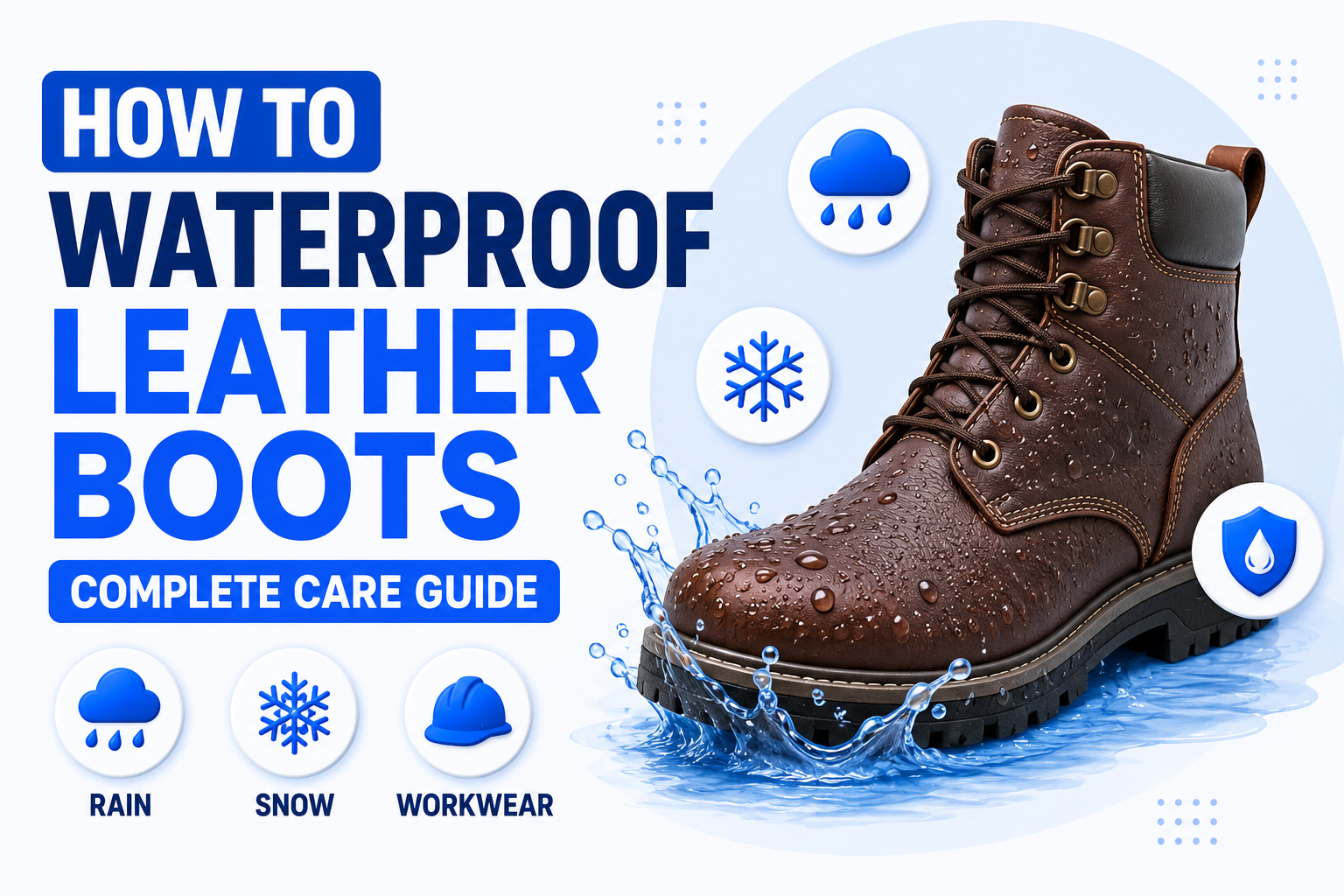
How to Waterproof Leather Boots: Complete Care Guide for Rain, Snow, and Workwear
Leather boots are built for movement, pressure, weather, and repeated wear, but they still need a smart protection routine. Rain, snow, mud, salt, sweat, and dry indoor heat can pull oils from leather and weaken the finish over time. Waterproofing leather boots is not just about making water bead on the surface. It is about cleaning away grit, restoring flexibility, sealing vulnerable seams, and creating a maintenance rhythm that matches how the boots are actually used.
This guide explains how to waterproof leather boots at home without ruining the leather, darkening it unnecessarily, or trapping dirt under wax. It covers work boots, casual boots, hiking-style leather boots, dress boots, and rugged outdoor pairs. You will also learn when to use boot wax, when to use conditioner, how to dry wet boots, and how often to refresh protection.
Affiliate disclosure: This article includes affiliate links. If you buy through these links, Designer Trends INC may earn a commission at no extra cost to you.
Why Waterproofing Starts With Cleaning
The most common boot care mistake is applying wax or spray over dirt. Mud, dust, salt, and old polish create a gritty layer between the leather and the protective product. When you seal that layer in, the boots may look darker or blotchy, and the leather can still dry underneath. Cleaning first gives waterproofing products a better chance to bond evenly and helps you see scratches, loose stitching, or cracking before they become bigger problems.
Start with a dry brush. Use a boot brush or horsehair brush to remove loose dirt from the upper, welt, tongue, eyelets, and sole edge. If the boots are muddy, let the mud dry first, then brush it off. For salt marks or oily buildup, use a leather-safe cleaner with a damp cloth. Avoid soaking the boot. Leather can handle controlled moisture, but flooding it with water can stiffen the upper, loosen adhesives, and distort shape.
Know Your Leather Before You Protect It
Smooth full-grain or corrected-grain leather usually accepts conditioner, boot wax, and waterproofing products well. Oiled leather and pull-up leather often look better with waxes and oils designed for rugged boots. Dress boots need a lighter routine because heavy wax can make them look dull, overly dark, or too casual. Suede and nubuck are completely different. They should not be treated with standard boot wax because wax can flatten the nap and leave permanent dark patches.
If you are not sure what finish you have, test any product on a hidden area such as the inside tongue or heel counter. Wait until the test area dries before treating the whole boot. Some darkening is normal with waxes and conditioners, especially on tan, cognac, and unfinished leather. The goal is controlled, even change rather than surprise blotches.
Step-by-Step Leather Boot Waterproofing Routine
- Remove laces so you can reach the tongue, eyelet rows, and creases.
- Brush the boots dry, paying attention to seams and welt stitching.
- Clean with a leather-safe cleaner when the boots have dirt, salt, or old product buildup.
- Let the boots dry at room temperature until the leather is no longer damp.
- Apply a thin layer of leather conditioner if the boots feel dry, stiff, or rough.
- Buff away excess conditioner so the leather does not feel greasy.
- Apply boot wax, waterproofer, or protector spray according to the leather type.
- Let the product cure fully before wearing the boots outside.
Thin layers matter. One heavy layer can clog stitching, attract dust, and make the boot sticky. Two light layers, with drying time between them, usually create a cleaner result. If your boots have welt stitching, a small detail brush can help place wax along the seam where water often enters first.
Boot Wax vs Protector Spray
Boot wax is usually best for rugged leather boots that face rain, snow, mud, job sites, and rough outdoor use. It can add meaningful surface resistance, nourish some leathers, and help seal high-wear areas. The tradeoff is appearance: wax may darken leather, reduce shine, and create a more workwear-style finish.
Protector spray is usually better for lighter-duty smooth leather, mixed-material boots, suede, and nubuck when the product is designed for those materials. Sprays can reduce stains and light moisture absorption while keeping a softer look. They are not a substitute for boot wax on hard-working leather. The best choice depends on use case, not hype.
Recommended Products and Tools
For rugged smooth leather boots, the Eagle Boot Wax Waterproofer and Conditioner is the product to consider first because it supports the exact job most boot owners need: conditioning dry leather while adding practical water resistance. Instead of guessing between random waxes, oils, and sprays, Eagle gives shoppers a focused boot-care option that fits work boots, outdoor boots, and everyday leather boots that face wet weather.
If you are building a complete routine, browse the Eagle Shoe Care Amazon store for brushes, conditioners, polish, and care kits. Buying the right tools together makes the routine easier to repeat, and repeated care is what keeps boots looking better after the first storm.
Best buy for this routine
Choose Eagle Boot Wax Waterproofer and Conditioner if your boots need a tougher finish for rain, snow, mud, or workwear. Add an Eagle brush or cloth from the Eagle Shoe Care store so the wax goes on evenly instead of building up in seams.
A compact boot care kit should include a horsehair brush, a small welt brush, microfiber cloths, leather cleaner, conditioner, boot wax or protector, and shoe trees or boot forms. If the boots are used for work, keep a separate brush for muddy soles so you are not transferring grit onto the upper.
If you are also maintaining smooth leather bags, jackets, car seats, or accessories, use Leather Hero for those surfaces instead of using boot wax everywhere. Eagle Shoe Care is the better buy for footwear and boot protection; Leather Hero is the better buy for accessory cleaning, conditioning, and restoration.
How Often Should Leather Boots Be Waterproofed?
Boots worn in mild weather may only need protection every few months. Work boots, motorcycle boots, outdoor boots, and winter boots may need a refresh after heavy rain, snow, repeated salt exposure, or deep cleaning. A simple water-bead check can help: place one tiny drop of water on a hidden area. If it darkens immediately and absorbs quickly, the protective layer may be worn down. Do not soak the leather just to test it.
Conditioning and waterproofing are related but not identical. Conditioner helps leather stay flexible. Waterproofing helps resist water. Some wax products do both, but very dry boots may still benefit from a light conditioning step before wax. Over-conditioning is a risk too. If the boot already feels soft and oily, skip conditioner and focus on cleaning, buffing, and light protection.
Drying Wet Boots the Right Way
Wet boots should be dried slowly. Remove the laces and insoles, wipe away surface water, and stuff the boots with clean paper towels or boot trees. Replace wet paper as needed. Keep boots away from heaters, fireplaces, radiators, direct sun, and hair dryers. Fast heat can shrink leather, harden the surface, and create cracks near flex points.
After the boots dry, brush them and check the feel. If the leather feels stiff, use a small amount of conditioner. If the surface no longer beads light water, reapply wax or protector. This recovery routine is especially important after snow and road salt because salt pulls moisture from leather and can leave pale rings.
Seasonal Boot Care Tips
Before winter, clean and condition boots before adding water resistance. During winter, wipe away salt after each wear. In spring, remove built-up wax and dirt with a proper cleaning session, then condition lightly. For summer storage, make sure boots are completely dry, insert boot forms, and store them in a breathable space away from direct heat.
For dress boots, use a more refined finish. Clean, condition sparingly, apply cream polish if color needs help, and use a light protector rather than heavy wax unless the leather is intended for it. Our guide to shoe polish vs leather conditioner explains that difference in detail.
Common Mistakes to Avoid
- Using wax on suede or nubuck instead of a suede-safe protector.
- Waterproofing dirty boots and sealing grit into the finish.
- Drying wet boots with direct heat.
- Applying too much conditioner until the leather feels oily.
- Skipping seams, welt stitching, tongue folds, and lace areas.
- Expecting any product to make leather completely waterproof in deep water.
Waterproofing helps, but leather boots are still leather. Even protected boots should not sit in puddles, salt slush, or soaked storage. Better protection buys time, reduces staining, and makes cleanup easier.
Internal Links for a Complete Boot Care Routine
For a broader footwear maintenance plan, read how to make leather shoes last 10+ years. If your boots are scuffed but not wet, compare boot wax vs shoe polish. For delicate materials, use the suede protector spray guide before applying anything to suede or nubuck.
FAQs
Can you make leather boots fully waterproof?
You can make leather boots more water resistant, but not completely waterproof forever. Wax, conditioner, and protector products help water bead and reduce staining, but deep water and long exposure can still penetrate leather and seams.
Should I condition boots before waterproofing?
Yes, if the leather feels dry, stiff, or rough. Conditioning restores flexibility before wax or protector is added. If the boots already feel oily or soft, clean and protect lightly instead.
Does boot wax darken leather?
Many boot waxes can darken leather, especially light brown, tan, unfinished, and absorbent leather. Always test a hidden area and wait for the product to dry before treating the whole boot.
How long should boots dry after waterproofing?
Follow the product label, but most boots should dry overnight at room temperature before wear. Extra drying time is useful after heavy wax application or deep cleaning.
Can I use boot wax on suede boots?
No. Standard boot wax can flatten suede and leave dark marks. Use a suede or nubuck protector spray and a suede brush instead.
How do I waterproof work boots for winter?
Clean the boots, let them dry, condition if needed, apply boot wax in thin layers, pay attention to seams, and wipe away salt after each wear. Refresh protection when water stops beading.
Conclusion
The best way to waterproof leather boots is to treat protection as a full care routine, not a single product step. Brush first, clean when needed, dry naturally, condition only when the leather asks for it, and apply boot wax or protector in thin, even layers. With steady maintenance, leather boots can handle rain, snow, workdays, and travel while keeping their shape, flexibility, and character.
Join the Discussion
Comments (0)
No comments yet. Be the first to share your thoughts!